
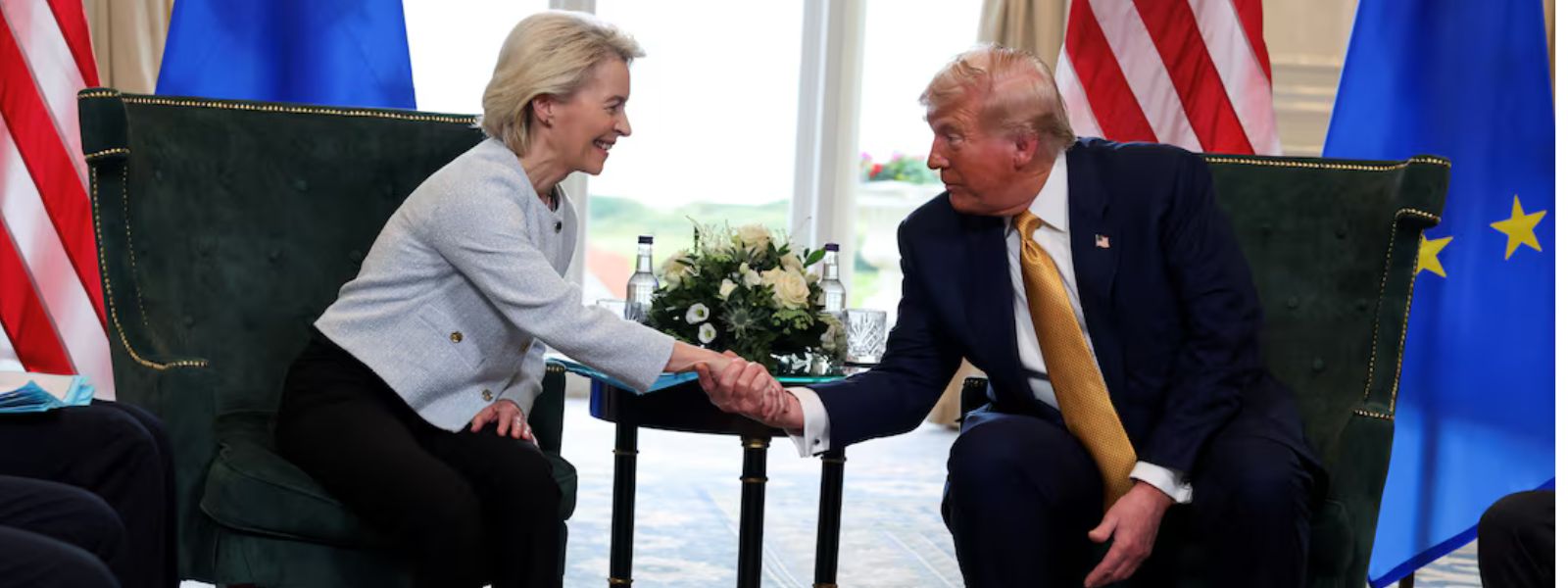
The United States and the European Union reached a major framework trade deal imposing a 15% import tariff on most EU goods entering the US. This agreement halved the previously threatened 30% tariff rate and averted a potential escalation into a larger trade war between two of the world’s largest economies.
The deal was announced by US President Donald Trump and European Commission President Ursula von der Leyen following negotiations at Trump’s Turnberry golf resort in Scotland.
The EU committed to making $750 billion in purchases of US energy (liquefied natural gas, oil, nuclear fuel), as well as roughly $600 billion in additional investments in the US over the coming years.
There are also significant commitments to purchase American military equipment. These numbers were confirmed or echoed in statements by both leaders and across multiple international news agencies.
Steel and aluminum exported from the EU to the US will continue to be subject to a 50% tariff, as previously imposed—these products are not covered by the 15% framework.
No tariffs will apply to certain categories of goods such as aircraft, some chemicals, and critical raw materials (“zero-for-zero” categories as part of the agreement). Some products, like spirits and wine, remain under negotiation or unresolved, and pharmaceuticals have partially unclear treatment in the initial statements.
The deal is considered preliminary in some areas, with several technical issues left for further negotiation.
The deal is widely seen as a win for Trump’s aggressive trade negotiating strategy and was welcomed by European officials for averting harsher economic penalties. German Chancellor Friedrich Merz and other EU leaders highlighted the protection received for the auto sector, which avoided steeper tariffs.
The euro rose modestly following the announcement, reflecting market relief after months of uncertainty.
Analysts and many EU officials nonetheless warn of potential long-term strain on the EU’s internal economy and criticize the agreement as leaving much unfinished and imbalanced, with the 15% rate seen as steep by many in Europe despite being lower than what was threatened.
(source Business Today)



Leave a Reply